
Introduction: Why Visual Merchandising Is a Strategic Business Function
Many brands still treat visual merchandising as purely decoration. In reality, it is a strategic commercial function that directly affects:
-
Sales performance
-
Brand perception
-
Customer decision-making
In physical retail, customers scan, not read. Color, layout, lighting, and product hierarchy influence decisions long before they notice price tags. Strategic visual merchandising is one of the most powerful tools in retail marketing.
What Is Visual Merchandising?
Definition in Retail Context
Visual merchandising is the strategic presentation of products in-store to:
-
Maximize visibility
-
Communicate brand value
-
Guide shopper movement
-
Increase conversion rates
It includes:
-
In-store displays
-
Display stands (metal, acrylic, MDF, hybrid)
-
POS displays
-
Store layout and signage
-
Lighting and color strategy
Visual merchandising relies on physical execution through custom display stands and POS materials that translate brand strategy into in-store impact
The Role of Visual Merchandising in Shopper Decision-Making
First Impressions Drive Sales
Shoppers form impressions in the first 5–10 seconds of entering a store. Strong visual merchandising:
-
Signals professionalism
-
Builds trust
-
Positions the brand as premium or value-driven
Reducing Cognitive Load
Clear, organized displays allow shoppers to:
-
Understand offers faster
-
Compare options easily
-
Make decisions with less effort
Examples of Effective Display Stands
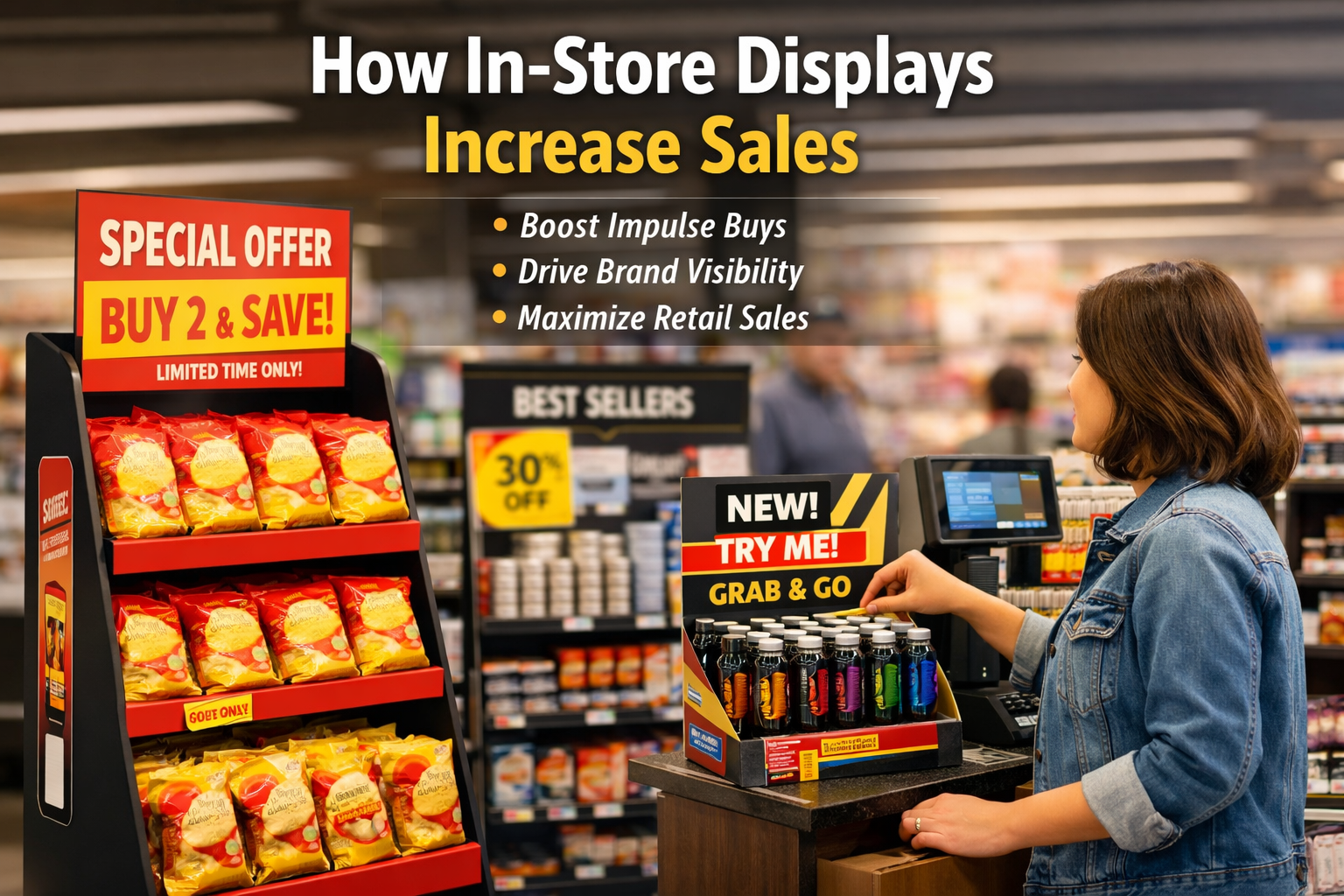
In FMCG environments, floor display stands placed in high-traffic areas such as aisles and end caps help brands achieve fast recognition and impulse purchases. Cardboard and metal display stands are commonly used for snacks, beverages, and personal care products due to their visibility and scalability.
In electronics retail, custom metal and acrylic display stands are used to showcase smartphones, accessories, and small appliances. These displays often integrate product information, security features, and lighting to support product education and build brand trust at the point of sale
Visual Merchandising as a Sales Growth Driver
Increasing Conversion Rates
Well-executed visual merchandising strategies lead to:
-
Higher dwell time
-
Larger basket value
-
Increased conversion
Tip: Include internal linking to case studies or product pages demonstrating increased sales with proper displays.
Supporting Impulse Buying
Impulse purchases depend on:
-
Product visibility
-
Emotional triggers
-
Convenience
Retail impulse purchases are strongly influenced by product placement and visual cues that trigger shopper motivation at the point of sale. Strategic visual merchandising ensures products are positioned in high-visibility zones, encouraging spontaneous buying decisions and increasing incremental sales without relying on discounts
Visual Merchandising and Brand Perception
From Product to Brand Experience
Consistent visual merchandising transforms retail space into a brand experience through:
-
Consistent colors and logo placement
-
Typography and material choices
-
Cohesive display stands and POS
Differentiation in Crowded Retail Environments
In categories with many similar products, strong merchandising differentiates your brand.
Key Elements of Effective Visual Merchandising
Display Stands and In-Store Displays
Display stands act as focal points:
-
Highlight hero products
-
Control product hierarchy
-
Direct shopper attention
Examples of Long-Tail Display Stands
Brands often use custom acrylic display stands to showcase cosmetics, perfumes, and electronic accessories in a visually appealing way. For heavier or industrial products, metal display stands for retail provide durability, support, and elevated product visibility. These tailored solutions not only enhance visual merchandising but also guide shopper attention and increase in-store sales
POS Displays
POS displays are critical for:
-
Promotions
-
New product launches
-
Seasonal offers
Layout and Flow
Good layout guides shopper movement using:
-
Sightlines
-
Hot zones
-
End caps
Visual Merchandising Across Retail Channels
FMCG and Supermarkets
Focus on:
-
Fast recognition
-
Clear pricing
-
High-traffic placement
Electronics and Durable Goods
Support:
-
Product education
-
Feature comparison
-
Brand trust
Measuring the Impact of Visual Merchandising
Key Performance Indicators (KPIs)
Measure effectiveness using:
-
Sales per square meter
-
Sell-through rate
-
Conversion uplift
-
Dwell time
Visual Merchandising ROI
Strong visual merchandising delivers:
-
Higher revenue density
-
Better brand recall
-
Stronger retailer relationships
Common Visual Merchandising Mistakes
-
Overloaded displays
-
Ignored shopper flow
-
Inconsistent branding
-
Design over clarity
Best Practices for Strong Visual Merchandising Strategy
Think Like a Shopper
Design from the shopper’s perspective, not the brand’s ego.
Keep It Simple
One display = one message = one action.
Align with Retailer Standards
Merchandising that disrupts operations rarely survives long-term.
Visual Merchandising as a Competitive Advantage
Brands that master visual merchandising:
-
Control brand visibility
-
Influence purchase decisions
-
Reduce reliance on discounts
Conclusion:
Visual merchandising is a non-negotiable pillar of retail marketing. Investing in display stands, POS materials, and in-store strategies ensures brands outperform competitors in sales, shopper experience, and brand perception.
How In-Store Displays Increase Sales
#PrimeSources_Partnership_Success
#Marketing_Soluations

 English
  العربية