
The Strategic Role of Display Stands and POS Displays in Modern Retail
Introduction: Why In-Store Displays Matter More Than Ever
In today’s highly competitive retail environment, brands are no longer competing only on product quality or price. They are competing for attention, experience, and visibility. This is where in-store displays, display stands, and POS displays become critical commercial tools.
While digital marketing drives shoppers into stores, the final purchase decision is made inside the retail space. Well-executed retail display solutions directly influence shopper behavior, shorten decision time, and increase conversion rates. In many categories, in-store displays outperform traditional shelf placement by a significant margin.
This article explores how custom display stands, POS displays, and in-store branding solutions increase sales, strengthen brand equity, and maximize return on retail space.
H2: Understanding Shopper Behavior Inside the Store
H3: The Moment of Truth at Point of Sale
The most important moment in retail is the last few meters before purchase. At this stage, shoppers are:
Comparing alternatives
Responding to visual cues
Making fast, emotional decisions
POS displays and product display stands are designed specifically for this moment. They interrupt routine shopping behavior and redirect attention toward specific products or offers.
H3: Visibility Equals Demand
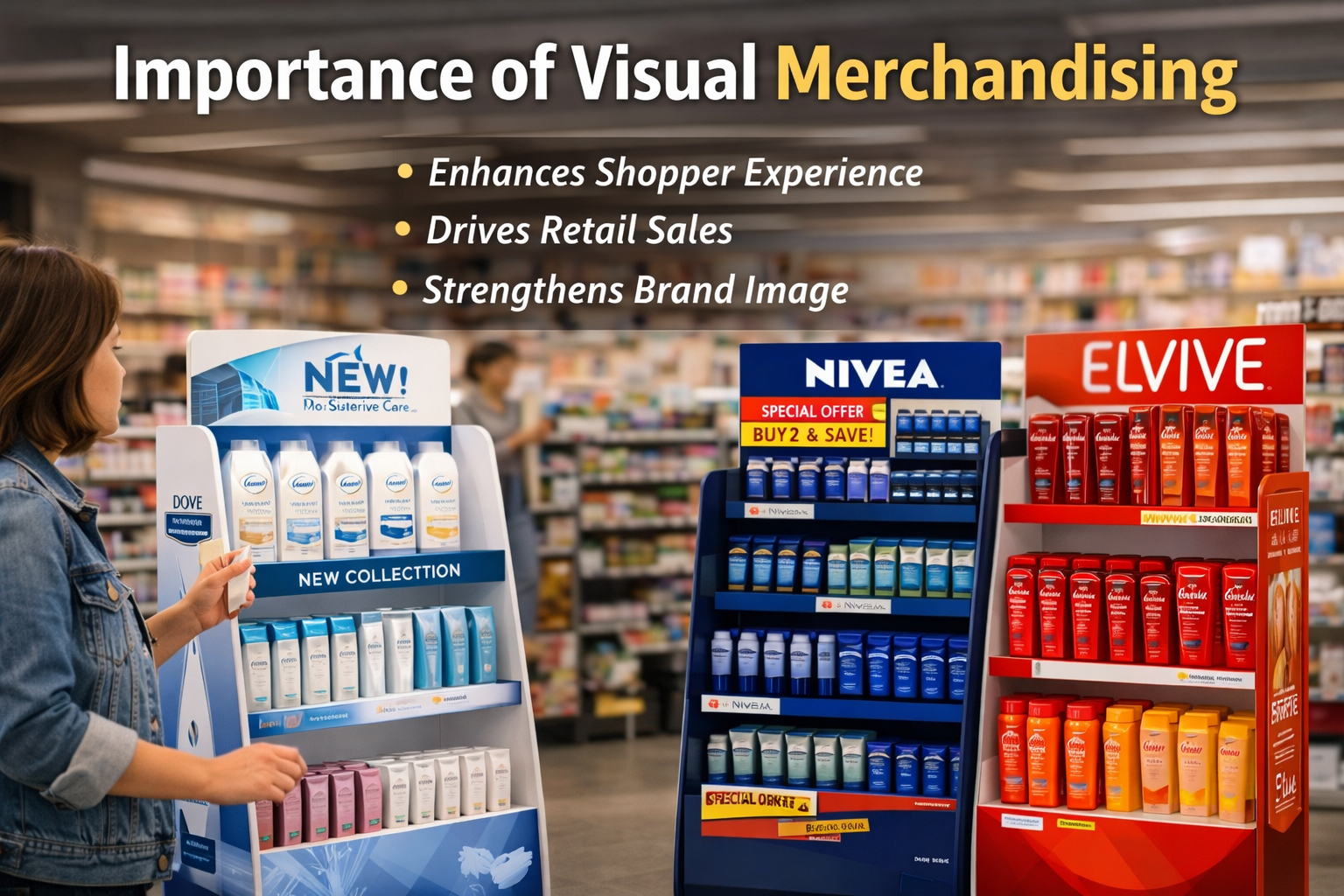
In retail psychology, visibility is often interpreted as popularity or quality. Products placed on custom display stands appear more important, more desirable, and more trustworthy than those buried on crowded shelves.
This is why brands invest heavily in retail display stands positioned at:
Aisle ends
Checkout counters
High-traffic zones
Promotional islands
H2: How In-Store Displays Directly Increase Sales
H3: Boosting Impulse Purchases
One of the strongest advantages of POS displays is their ability to drive impulse buying. Shoppers may not enter the store intending to buy a product, but:
Clear pricing
Strong visual branding
Easy accessibility
can trigger immediate purchase decisions.
Impulse-driven categories such as FMCG, snacks, cosmetics, and beverages rely heavily on point of sale displays to generate incremental sales.
H3: Improving Product Accessibility
Products displayed on dedicated display stands are easier to see, reach, and understand. This reduces friction in the buying process and increases conversion rates, especially in busy retail environments.
H2: From Shelf Space to Brand Space
H3: The Power of In-Store Branding
Standard shelves sell products.
In-store display solutions sell brands.
When a display integrates:
Brand colors
Logo placement
Messaging
Material quality
it creates a micro-brand environment inside the store. This strengthens brand recall and positions the product beyond price competition.
H3: Brand Consistency Across Touchpoints
Using consistent in-store branding across display stands, signage, and POSM materials reinforces trust. Shoppers are more likely to choose brands they recognize and feel familiar with, even when alternatives are cheaper.
H2: Types of In-Store Displays That Drive Performance
H3: Custom Display Stands
Custom display stands are designed around the product, brand, and retail environment. They outperform generic displays because they:
Fit store layouts precisely
Highlight key product benefits
Support brand storytelling
H3: POS Displays and Counter Displays
POS displays placed near checkout areas capitalize on last-minute decisions. They are ideal for promotions, new product launches, and limited-time offers.
H3: Material-Based Displays
The choice of material affects perception and durability:
Metal display stands: strength, longevity, premium feel
Acrylic display stands: modern, clean, high visibility
MDF / wooden displays: warmth, cost efficiency
Hybrid displays: balance aesthetics and performance
Material selection directly impacts ROI.
H2: Commercial Impact and ROI of In-Store Displays
H3: Measuring Success in Retail Displays
Brands evaluate retail display solutions using metrics such as:
Sell-through rate
Conversion per square meter
Incremental sales vs shelf placement
Campaign performance duration
Well-designed display stands consistently deliver higher returns compared to traditional shelving.
H3: Cost Efficiency Over Time
Although custom displays may have higher initial costs, their durability, reusability, and scalability make them more cost-effective in long-term retail strategies.
H2: Best Practices for High-Performing In-Store Displays
H3: Strategic Placement
Placement is more important than design. Displays should be positioned where shoppers naturally slow down or make decisions.
H3: Clear and Focused Messaging
Each display should communicate:
One product
One benefit
One action
Overloaded displays reduce effectiveness.
H3: Retail Compliance and Ease of Use
Successful POS displays must:
Fit retailer standards
Be easy to install and restock
Avoid disrupting store operations
Retail staff acceptance is critical to sustained performance.
H2: Common Mistakes Brands Should Avoid
Many brands invest in displays but fail to see results due to:
Poor placement decisions
Overcomplicated designs
Weak brand visibility
Low-quality materials
Ignoring shopper behavior
A display that looks good but does not sell is a wasted investment.
H2: Case Example – FMCG In-Store Display Success
An FMCG brand replaced traditional shelf placement with custom POS displays across multiple supermarket locations. The results included:
Over 30% increase in sales
Higher product visibility
Improved brand recall
Faster inventory turnover
The success came from aligning design, placement, and shopper behavior—not from aesthetics alone.
H2: How Brands Should Execute In-Store Display Strategies
To maximize results, brands should:
Analyze shopper behavior and store traffic
Choose the right display type and material
Design for clarity and brand alignment
Test placement and optimize performance
Scale successful formats across locations
In-store displays should be treated as strategic sales assets, not temporary marketing tools.
Conclusion: In-Store Displays as a Growth Engine
In-store displays are no longer optional in modern retail. They are a core component of retail marketing, shopper marketing, and brand activation strategies.
Brands that invest in smart display stands, POS displays, and in-store branding solutions gain:
Higher conversion rates
Stronger brand presence
Better ROI on retail space
In the battle for shopper attention, the brands that win inside the store are the brands that grow faster outside it.
#PrimeSources_Partnership_Success
#Stores_Displays
#Sales_Increase
#Marketing_Solutions

 English
 العربية